The FCC Clears Reflect Orbital's Space Mirror and Rules the Night Sky Outside Its Authority
On 9 July 2026 the FCC's Space Bureau licensed Earendil-1, a demonstration satellite that will unfurl an 18-metre mirror and steer reflected sunlight to the ground at night. More than 1,800 people objected. The Bureau granted the radio license and held that the satellite's effect on optical astronomy sits outside what the Commission may review, a line that reaches every novel mission behind it.
What happened
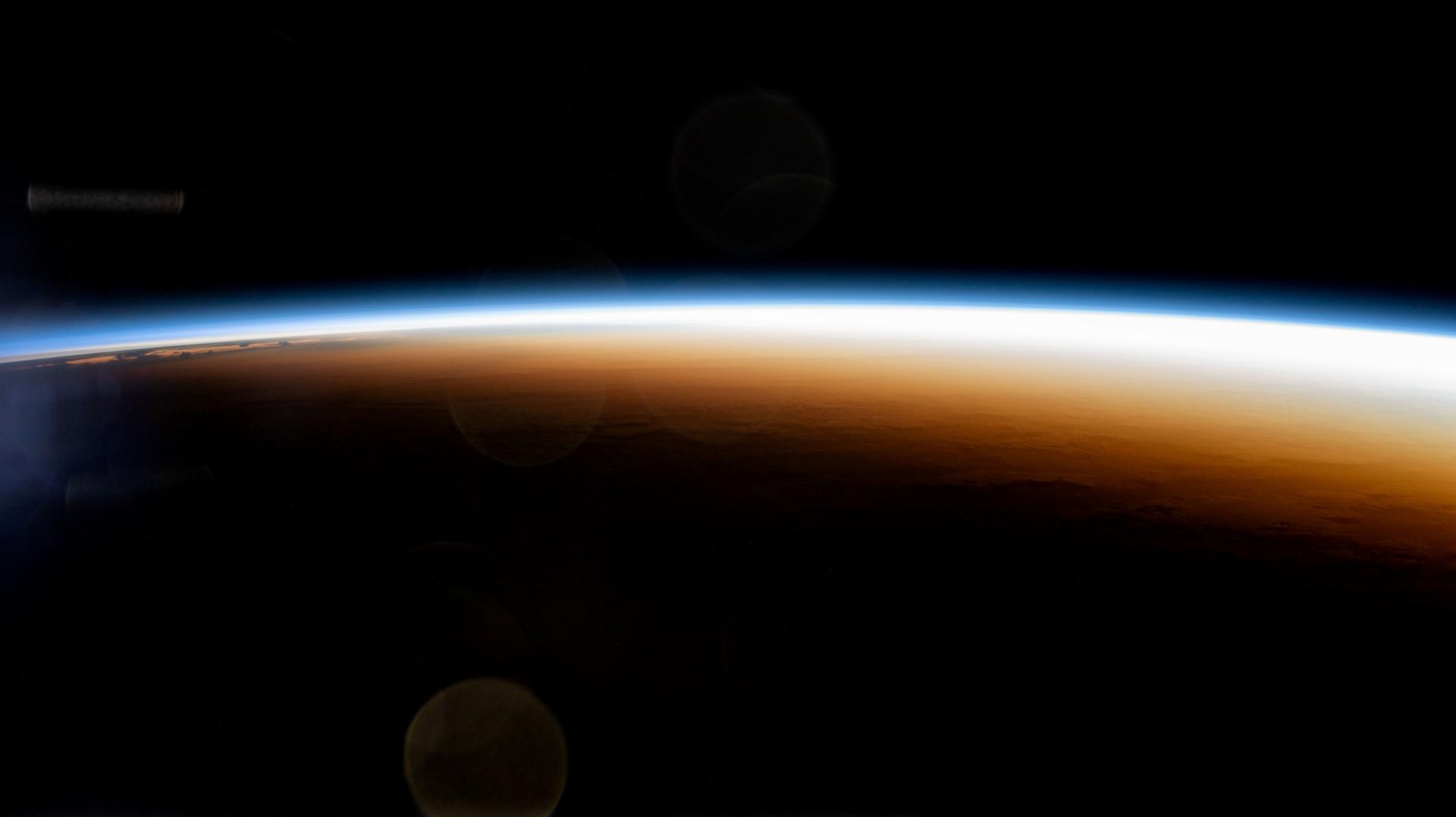
On 9 July 2026 the Chief of the FCC's Space Bureau signed an order, DA 26-706, authorizing Reflect Orbital to deploy and operate Earendil-1, a demonstration satellite that carries a deployable, steerable thin-film reflector 18 metres on a side. The craft would fly a near-polar orbit at about 625 km and unfurl the mirror to redirect sunlight onto designated ground targets at night, a few minutes at a time, over a footprint a few kilometres wide. The grant is narrow in two ways worth reading closely. It licenses the radio station, the S-, X-, and UHF-band operations and the orbital-debris plan, not the mirror function itself, and it runs for two years rather than the standard fifteen, with a bond due in August and a hard launch deadline in 2032.
The application drew an unusual public response. More than 1,800 individuals wrote in, most through template letters organized by DarkSky International and a Princeton-run campaign, and the American Astronomical Society filed a formal petition to deny. The International Astronomical Union, the Royal Astronomical Society, DarkSky International, and bodies ranging from an entomological society to aviation-safety commenters objected, and the European Southern Observatory's modelling, reported in the trade press, put a full 50,000-reflector constellation at three to four times the natural sky brightness over its sites. The Bureau granted the license anyway, and the reasoning is the part a space lawyer should keep.
Why it matters for dispute formation
The Bureau drew a jurisdictional line. Its licensing authority, it held, reaches an operator's radiofrequency operations and its orbital-debris mitigation, and not much else a spacecraft does in orbit. Concerns about the satellite's effect on optical astronomy, it wrote, fall outside its review and are not a basis to deny the application or to attach conditions, because the Commission's rules do not address the protection of optical astronomy. It grounded that in the post-Chevron world, citing the Supreme Court's 2024 decision in Loper Bright v. Raimondo for the point that an agency cannot reach past its statutory authority on a generalized public-interest theory, and it added that any new service-wide obligation should come through notice-and-comment rulemaking, not an ad hoc condition on one license. On NEPA it went further than the press coverage suggested: the environmental review attaches to the proposed action, the radio station, and the reflector's operation is too attenuated from the spectrum grant to fall within it, citing the Court's 2025 ruling in Seven Counties Infrastructure Coalition v. Eagle County. In the alternative it found the objectors had not shown with specificity that one demonstration satellite would have a significant effect, and declined to treat a hypothetical mega-constellation as the action before it.
For anyone planning a mission that does something new in orbit, this is the map of where the regulator stops. The FCC will police your spectrum and your debris. It has now said, in a signed order, that novel physical effects outside those two boxes are not its to weigh, which is a shield and a warning at once. A shield, because a light-pollution or aesthetic objection has no obvious home at the Commission. A warning, because the protection an operator's own neighbours might have wanted lives in voluntary commitments the FCC declined to make binding, and the gap will pull in other actors: a future rulemaking, the NSF, state or foreign regulators, or Congress. Because this is a Bureau order on delegated authority, the astronomical society can seek review by the full Commission and then the D.C. Circuit, but the recent record is discouraging for challengers. Read the order for what it authorizes and, more importantly, for what it says it cannot touch, because that boundary is now the template for the next weird thing someone flies.
Who's exposed
Exposed as the holder of a conditioned, two-year license for a single satellite, with a surety bond due 10 August 2026 and a launch deadline of July 2032, and no clearance for the roughly 50,000-reflector constellation it wants: the Bureau said any future system will be reviewed on its own merits.
Exposed as the objectors whose optical-astronomy, dark-sky, and eye-safety concerns the Bureau ruled outside its authority, leaving them to rely on Reflect Orbital's voluntary commitments to coordinate with NASA and the NSF and avoid professional research sites rather than on binding license conditions.
Exposed to a holding that cuts both ways: the order reaffirms that aggregate constellation effects, from cumulative brightness to collision risk, are not weighed at the single-license stage, which shields a new grant now and leaves the question open for the constellation-review rulemakings still pending.
Exposed as the operators of solar sails, space advertising, in-space manufacturing, and space-based solar power for whom this order maps the outer boundary of FCC review: if a spacecraft's novel effect is not radio interference or orbital debris, expect the Commission to call it outside its authority rather than regulate it.
The historical parallel · International Dark-Sky Association v. FCC, 106 F.4th 1206 (D.C. Cir. 2024)
The D.C. Circuit upheld the FCC's approval of SpaceX's second-generation Starlink constellation over dark-sky and NEPA objections, endorsing the Commission's narrow reading of how far its environmental review extends over satellites. The Bureau leaned on that decision directly in the Reflect Orbital order. The companion case is Viasat v. FCC in 2022, where a challenge to a Starlink grant on environmental grounds was turned away on standing and zone-of-interests, not on the merits. Together they show the pattern: arguments that the FCC's review is too narrow keep failing on justiciability rather than substance, which is the wall a Reflect Orbital appeal would hit.
What to watch
- Whether the American Astronomical Society files an application for review to the full Commission or a petition for reconsideration, and how the Commission treats the scope-of-authority holding.
- The pending rulemakings on satellite environmental review and on novel space activities, and whether either converts constellation-level or non-RF effects into binding review.
- Whether any future Reflect Orbital constellation triggers its own review, as the Bureau said it would, and on what terms.
- The standing and zone-of-interests hurdles any appeal faces at the D.C. Circuit, given how earlier astronomy and competitor challenges to satellite grants have fared.
Sources
- FCC — Reflect Orbital Inc., Order and Authorization (DA 26-706, released 9 July 2026)
- SpaceNews — FCC approves first Reflect Orbital satellite
- Astronomy.com — FCC approves Reflect Orbital filing for mirror in space
- Via Satellite — FCC Approves Reflect Orbital Demo Satellite to Test Redirecting Sunlight
- Scientific American — U.S. Approval of Giant 'Space Mirror' Satellite Alarms Astronomers
See the disputes forming before the market does.
Signal Watch tracks the developments. The monthly Intelligence Brief synthesizes all four signals into the disputes most likely to crystallize next — free.
Get the Intelligence BriefFor general information only; not legal advice, and no attorney–client relationship is formed through this article. Company names appear because the companies are exposed to a public development — not as a statement of wrongdoing or a predicted outcome. Figures are as reported by the linked sources.