Skyroot Reaches Orbit on Vikram-1's First Flight, and India's Private Launch Sector Runs Ahead of Its Law
On 18 July 2026 Skyroot Aerospace put Vikram-1 into low Earth orbit from ISRO's Sriharikota range, India's first private orbital launch, ten weeks after a US$60m round made it the country's first space-tech unicorn. The authorization, liability, and insurance behind a launch like this still rest on IN-SPACe clearances and ISRO facility access, not an enacted space statute.
What happened
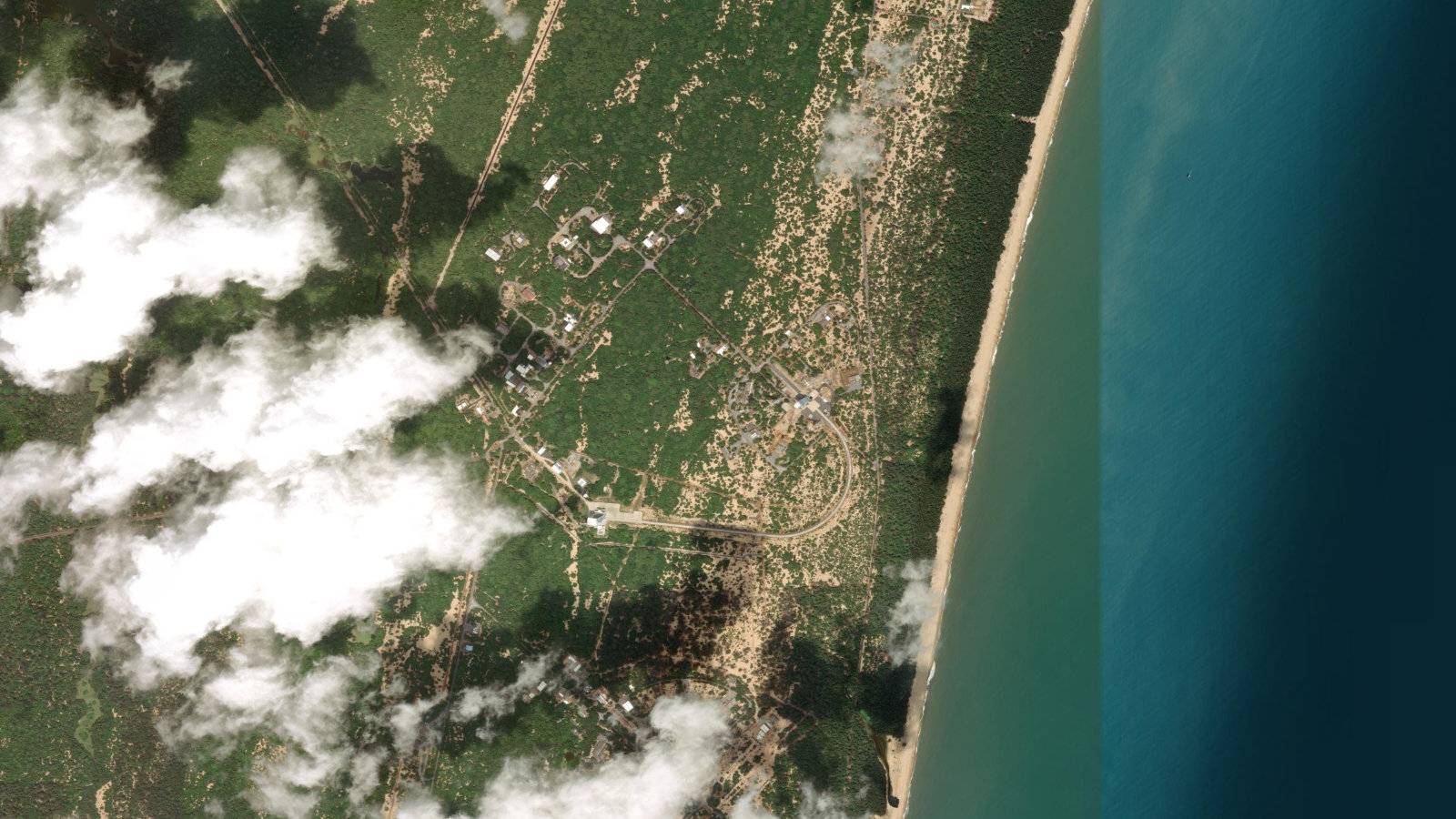
On 18 July 2026 Skyroot Aerospace launched Vikram-1 from the First Launch Pad at the Satish Dhawan Space Centre in Sriharikota. The mission, named Aagaman, reached roughly 450 km in low Earth orbit on the first attempt and deployed two satellites, SCOPE and Grahaa, alongside upper-stage experiments and a technology demonstrator from the German firm DCUBED. A short technical hold near the end of the countdown pushed liftoff by about 35 minutes, with no failure and no third-party damage reported. It was the first orbital launch by a private Indian company from Indian soil, on a four-stage vehicle built around three solid stages and a liquid RAMAN-I upper stage.
The flight came ten weeks after a financing milestone. In May 2026 Skyroot raised US$60 million, with US$50 million in equity co-led by Sherpalo Ventures and GIC and about US$10 million in debt through BlackRock-managed funds, at a valuation that made it India's first space-tech unicorn. Ram Shriram joined the board. The rocket flew from an ISRO government range under clearances from IN-SPACe, the national authorization body, and Skyroot still has no launchpad of its own. Its Hyderabad campus builds and tests hardware; the pad, the static-test stands, and mission control belong to the State.
Why it matters for dispute formation
India runs one of the fastest-liberalizing space markets in the world on a legal base that is still administrative rather than statutory. Private launch rests on the Indian Space Policy of 2023 and on IN-SPACe clearances and ISRO facility-access agreements, not on an enacted space law. The Space Activities Bill of 2025, which would give IN-SPACe statutory authority and set rules on liability, insurance, intellectual property, and compliance with the Outer Space Treaty and the Liability Convention, was slated for consultation in 2026 and is not yet law. The authorization to launch, the allocation of liability if a mission causes damage, and the insurance that sits behind it are therefore governed by policy and contract that a later statute could rewrite.
That gap is where the diligence sits. Under the Liability Convention, India as the launching state carries international liability for a Vikram flight regardless of who operated it, and the domestic question of how much of that liability the operator and its insurers absorb is unsettled. For counterparties, most of the cross-border relationships are memoranda of understanding rather than firm launch contracts, including the partnerships with Exolaunch in Germany and Axiom Space in the United States, so export-control terms and liability clauses are still to be papered. For a general counsel the work is concrete: map the authorization basis, read the ISRO facility-access and indemnity terms, price the insurance stack against a state-liability backstop that law has not yet defined, and track how the pending bill could move liability between the State and the operator.
Who's exposed
Exposed as the operator that reached orbit on Vikram-1's first flight from a government range under IN-SPACe clearance, with its authorization to launch, its access to the pad and test stands, and the allocation of launch liability resting on administrative arrangements and contracts rather than statute.
Exposed as regulator and host at once: IN-SPACe grants the clearances and mission-readiness reviews, and ISRO supplies the launchpad and test infrastructure, so a private mission's legal basis and its physical access both run through State bodies.
Exposed as the launching state that carries international liability for a national's launch under the Liability Convention, while its domestic Space Activities Bill remains in consultation and the share of that liability borne by private operators is unsettled.
Exposed as counterparties whose payloads and launch-services arrangements sit largely in memoranda of understanding rather than firm contracts, with export-control terms and liability clauses still to be papered as cadence rises.
The historical parallel · Cosmos 954 and the Liability Convention (Canada–USSR, 1978)
When the Soviet nuclear-powered satellite Cosmos 954 scattered radioactive debris across northern Canada in 1978, Canada claimed against the USSR under the 1972 Liability Convention, and the launching state settled for C$3 million. It remains the only formal invocation of the Convention, and it fixed the principle that international liability for a space object runs to the launching state whatever private hands built or flew it. India is the launching state for every Vikram flight. Until a domestic statute sets how that liability is shared with the operator and its insurers, the allocation lives in administrative clearances and contracts rather than law, which is exactly where a future claim would have to be argued.
What to watch
- Whether the Space Activities Bill 2025 moves from consultation to enactment, and how it allocates launch liability and insurance between the State and private operators.
- How Skyroot's ISRO facility-access and IN-SPACe authorization terms treat indemnity and third-party liability as launch cadence rises.
- Whether the cross-border MoUs with Exolaunch, Axiom Space, and payload customers such as DCUBED convert into firm launch contracts carrying export-control and liability clauses.
- Two softer flags worth diligencing before they harden: reported delays in MSME supplier payments, and Skyroot's earlier advocacy for a statutory cap on private launch liability.
Sources
- ISRO — First private orbital launch lifts off from Sriharikota
- SpaceNews — Skyroot Aerospace reaches orbit on first Vikram-1 launch
- TechCrunch — India's first space-tech unicorn emerges as Skyroot gears up for orbital launch
- Business Standard — Skyroot Aerospace raises $60mn, becomes a unicorn valued at $1.1bn
- Lexology — India's redrafted Space Activities Bill 2025
- Exolaunch — Strategic Partnership Agreement with Skyroot Aerospace
See the disputes forming before the market does.
Signal Watch tracks the developments. The monthly Intelligence Brief synthesizes all four signals into the disputes most likely to crystallize next — free.
Get the Intelligence BriefFor general information only; not legal advice, and no attorney–client relationship is formed through this article. Company names appear because the companies are exposed to a public development — not as a statement of wrongdoing or a predicted outcome. Figures are as reported by the linked sources.